


Most people assume communication breakdowns happen because they lack confidence, skill, or preparation.
That’s rarely the real issue.
The truth is simpler and harder to face:
You already know what great communication looks like.
You just can’t consistently access it under pressure.
Here are the five reasons why, and what actually needs to change.
1. You’re Trained for Knowledge, Not Pressure
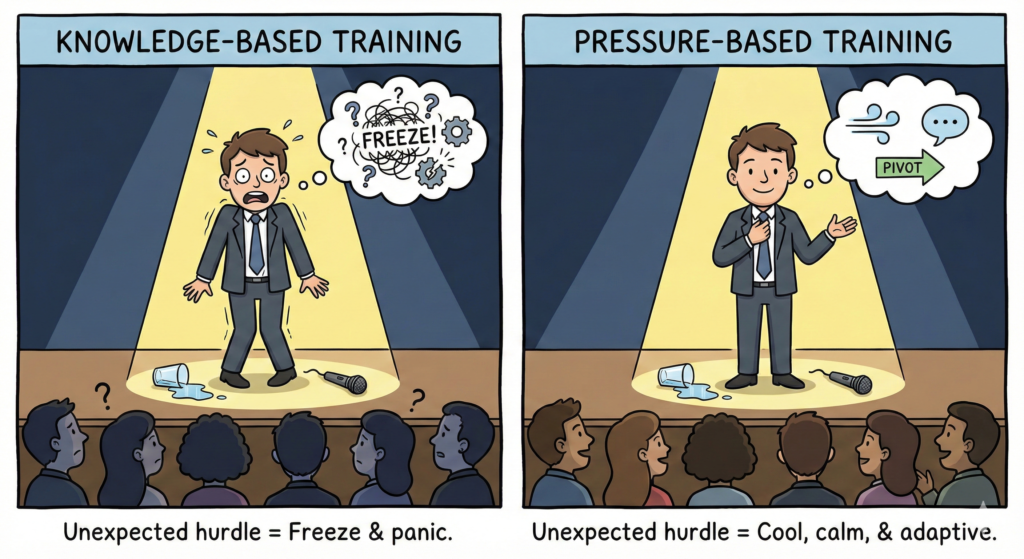
Most communication training focuses on what to say:
- frameworks
- story structure
- talking points
- delivery tips
That works…until pressure enters the moment.
A live audience, an unexpected question, a high-stakes meeting: these moments don’t test knowledge. They test regulation.
Under pressure, the nervous system shifts into survival mode. Cognitive access narrows. Breathing shortens. Time feels compressed.
No amount of intellectual understanding can override a dysregulated system.
Reason this matters:
You don’t fail because you forgot the skill. You fail because pressure blocks access to it.
2. Pressure Hijacks the Nervous System Before You Realize It
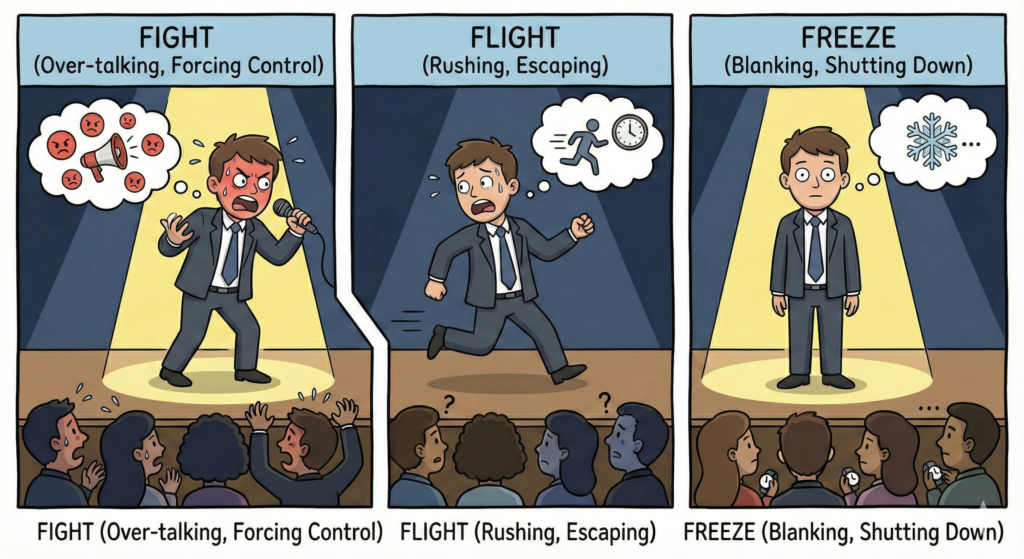
When people say they “freeze” or “ramble,” what they’re describing isn’t a mindset issue. It’s a biological response.
Pressure triggers:
- fight (over-talking, forcing control)
- flight (rushing, escaping the moment)
- freeze (blanking, shutting down)
This happens before conscious thought.
By the time you notice something feels off, your system has already taken over.
Reason this matters:
You can’t think your way out of a nervous system response. It has to be trained at the level where the reaction begins
3. More Tips Actually Make It Worse
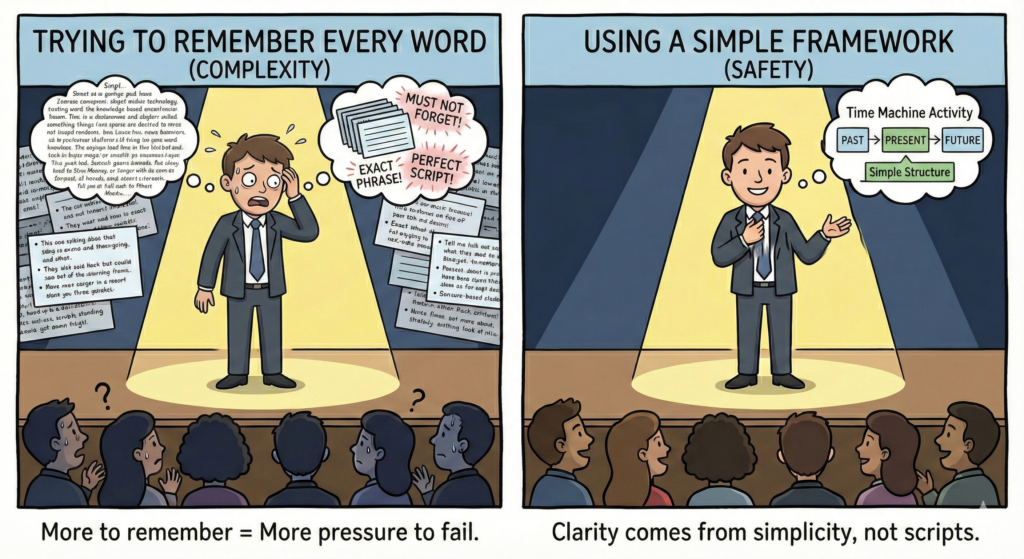
When communication feels shaky, people usually respond by adding more:
- more preparation
- more scripts
- more talking points
- more mental rehearsal
Ironically, this increases pressure.
Under stress, the brain doesn’t want more information. It wants safety.
More complexity means more to lose, more to remember, and more to get wrong. That’s why scripts disappear and “perfectly planned” points vanish in real moments.
Reason this matters:
Clarity doesn’t come from adding more. It comes from creating conditions where simplicity can survive pressure.
4. You Already Know What “Great” Looks Like
Here’s the part most people don’t expect.
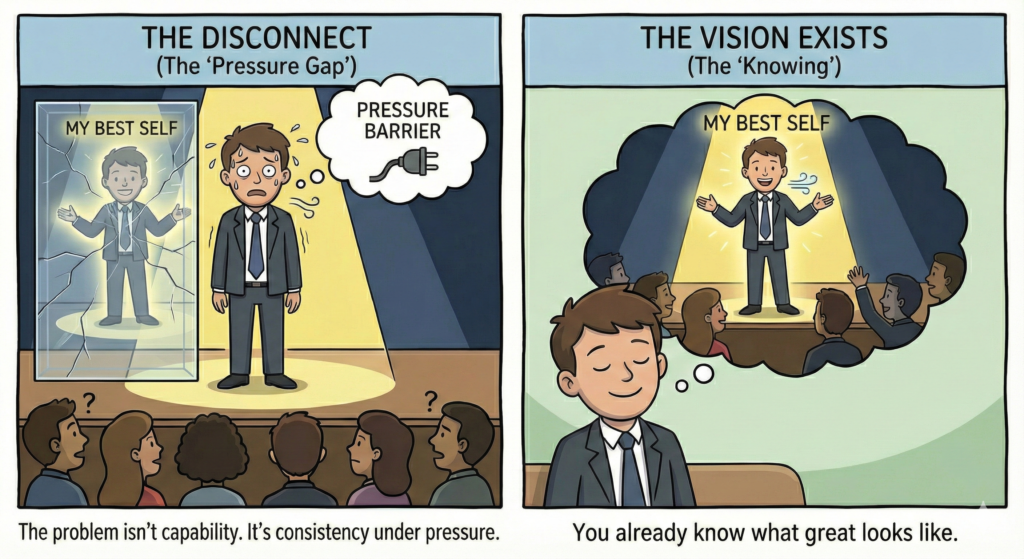
When individuals are guided to imagine themselves communicating at their best, without instruction, they don’t struggle.
They recognize it instantly:
- how they’re standing
- how they’re breathing
- how they’re connecting
No one needs to be taught what world-class communication looks like.
Which raises an important question:
If you already know what great looks like… why can’t you always do it?
Reason this matters:
The problem isn’t capability. It’s consistency under pressure.
5. Communication Fails Because Regulation Isn’t Trained
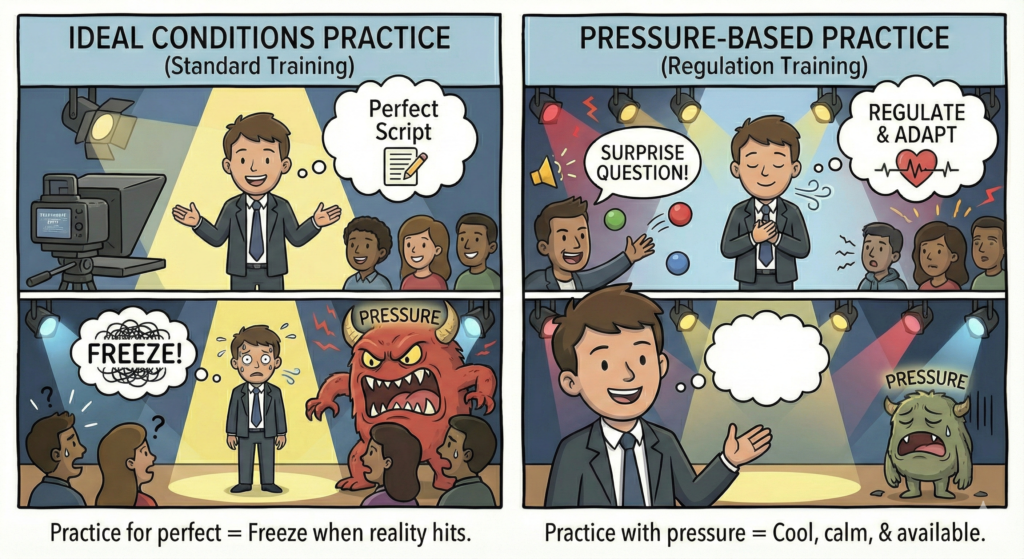
This is the missing piece in nearly every program.
Every speaking or leadership course trains people to be good in ideal conditions. Very few train people to stay grounded when conditions aren’t ideal.
Pressure is the variable no one practices with.
When regulation is trained:
- breathing stabilizes
- pacing slows naturally
- clarity returns
- confidence becomes consistent
Not because you force it, but because your system allows access again.
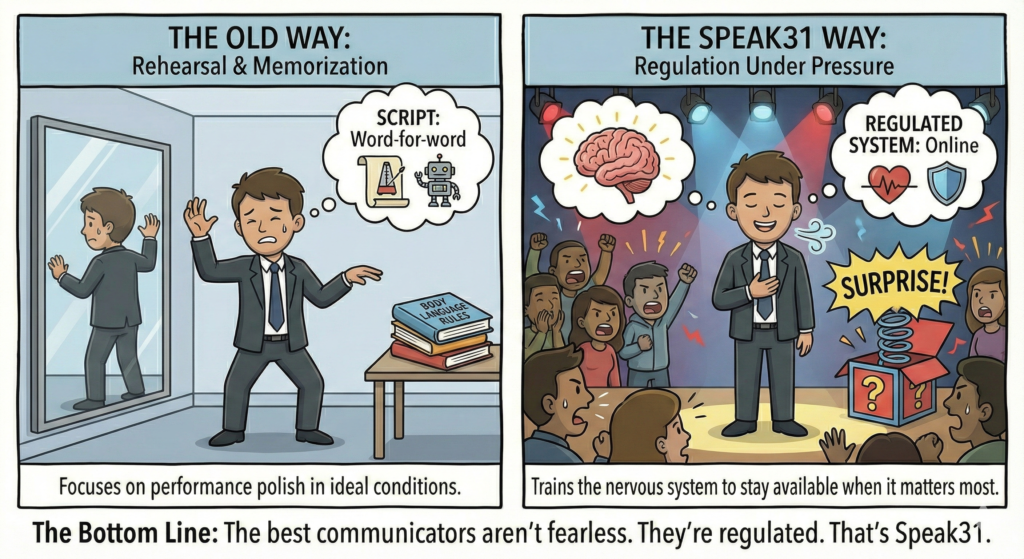
This is why Speak31 focuses on real-time practice under controlled pressure, not memorization or performance polish.
Reason this matters:
The most important communication skill isn’t confidence or storytelling; it’s staying available to yourself when pressure shows up.
The Bottom Line
You don’t need more communication knowledge.
You need training that prepares you for the moments when knowledge becomes inaccessible.
The best communicators aren’t fearless.
They’re regulated.
They’ve trained their nervous system to stay online when it matters most.
That’s the difference between knowing what world-class looks like—and being able to deliver it under pressure.
That’s the work.
That’s the methodology.
That’s Speak31.
Book a free training session with the Speak31 Team and let’s turn your dream into reality.
Speak31 is a live, science-backed module-based communication training system that conditions the nervous system to perform under pressure. Instead of scripts or memorization, it uses real-time practice to build calm, clarity, and confidence when it matters most. Learn more or experience a live session at speak31.com.